
Ember: Walk With God
WiseWakeTechBooks & Reference
4.5701.00 Reviews
- Version
- 1.2.6
- Installs
- 100.00K
- Age Rating
- Everyone
Screenshots
Our Review of Ember: Walk With God
 Analysis by Appyee
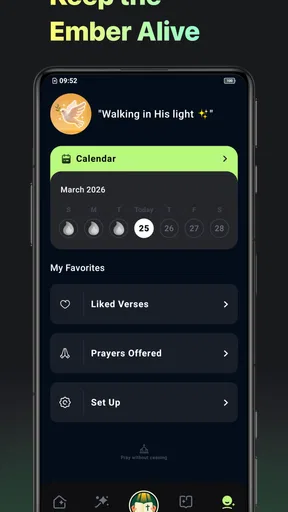
I approached Ember: Walk With God as a quiet companion for Scripture, prayer, and Bible study rather than as a replacement for a full digital Bible. That distinction matters. The app’s focus is narrow, and I think that is part of its appeal: it aims to bring a few faith-centered activities together without making the experience feel like a crowded reference library.
After spending time with it, my impression is that Ember is best suited to someone who wants a simple prompt to pause, read, pray, and test their knowledge. It feels especially approachable for people who are building a regular habit and do not want to begin with a complicated study system. At the same time, anyone looking for extensive scholarly tools, broad reading-plan controls, or a replacement for a printed study Bible may find the experience too limited.
How Ember feels in its current form
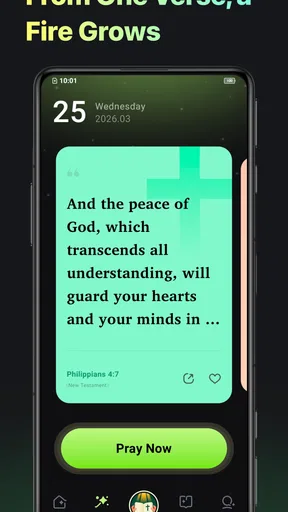
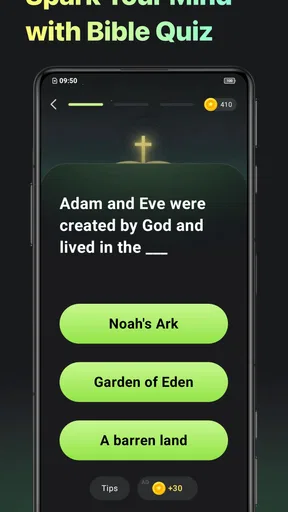
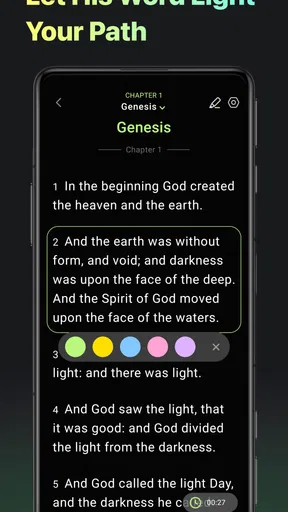
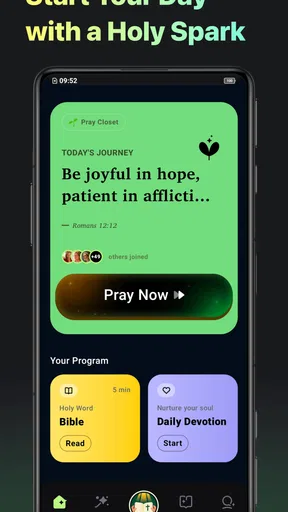
The app sits in the Books & Reference category, but its personality is more devotional than encyclopedic. Its central idea combines Scripture, prayer, and Bible quizzes, giving the user several ways to engage with the same subject. You can read for reflection, turn toward prayer when you need a slower moment, or use questions to check whether a passage has actually stayed with you.
I like that combination because it supports different moods. Some days I want to read without being tested. On other days, a short quiz is more useful than simply scrolling through familiar verses. The prayer side also gives the app a more personal purpose than a basic text reader. It encourages a transition from collecting information to responding to it.
The developer is WiseWakeTech, and the current build is version 1.1.6. That version detail is worth noting because Ember still feels like a relatively young product rather than a mature platform with years of accumulated options. Its presentation is easier to understand when viewed as an evolving devotional app: the main experience is clear, while the deeper layers are still developing.
Its public reception is encouraging, with a 4.7 average from around 2.2 thousand ratings and more than 100 thousand installs. I would not treat those figures as proof that it will suit every reader, but they do suggest that the basic concept is connecting with a meaningful audience. The app is free and rated for Everyone, which makes trying it a low-risk decision for families, casual readers, and people beginning a personal Bible routine.
A practical rhythm for everyday use
One realistic way I would use Ember is during a short morning pause before work. Instead of opening a social feed, I could read a passage, sit with one idea, and move into prayer while the thought is still fresh. Later, I could return to the quiz section to see whether I remember the central details. That sequence gives the session a beginning, a reflective middle, and a small check at the end.
The same approach works in a different setting. A student could use it during a quiet evening break, while a family might take turns answering questions after reading together. The quiz element is particularly useful here because it creates a natural conversation without requiring everyone to prepare a lesson in advance.
My main tip is not to treat every section as something that must be completed in one sitting. The reading and prayer functions serve a slower purpose, while quizzes are more active. Separating them can make the app feel less like a checklist. I found that a brief, intentional visit was more satisfying than trying to consume everything quickly.
What the combination does better than a standard Bible app
A conventional Bible app usually wins when the priority is searching, comparing translations, locating a chapter quickly, or studying with extensive notes. Ember’s advantage is different. By placing prayer and quizzes beside Scripture, it gives the user a reason to remain in the app after reading the text.
That design can help with a common problem: reading without remembering or reflecting. A passage may seem meaningful in the moment and then disappear from attention a few minutes later. A quiz can expose that gap, while prayer can turn a general impression into something more personal. Neither feature replaces serious study, but together they make passive reading less likely.
There is also a useful trade-off in the app’s focused scope. A large Bible platform may offer more tools but can take longer to navigate. Ember is easier to approach when I want a devotional moment rather than a research session. If I already know that I need cross-references, detailed commentary, or advanced search, I would choose another tool first and use Ember for a different purpose.
Small workflows that make the app more useful
One helpful workflow is to use the quiz as a memory check instead of a score chase. After reading, I would answer the questions honestly before looking back at the passage. If I miss something, that tells me what deserves a second look. This turns the quiz into a lightweight study aid rather than a separate game that has no connection to the reading.
A second approach is to let prayer determine the length of the session. Rather than deciding that every visit must last a fixed amount of time, I would read until one idea stands out, then move into prayer around that idea. This is a better fit for busy days because the app can support a short pause without making the user feel that a full lesson was abandoned.
A third use is group discussion. One person can read, another can respond to the prayer prompt, and everyone can use the quiz questions as conversation starters. The questions do not need to be treated as a formal competition. In my view, their strongest value is that they give a group something concrete to discuss when a general question such as “What did you think?” produces only silence.
These workflows also reveal an important limitation: Ember depends on the user bringing intention to the session. It can provide structure, but it cannot create a meaningful habit by itself. Someone who wants automatic accountability, extensive scheduling, or a highly customized curriculum may need a more specialized service alongside it.
What has changed, what still needs attention, and what I would watch next
I’d use this section to frame the current version as a focused starting point, then look at whether future changes make the handoff between reading, prayer, and recall feel more natural. For a household sharing a device, the practical question is also whether each person can keep a session personal without assuming the app provides separate profiles or family tools; that’s worth checking in the app itself before making it part of a shared routine.
The significance of the current release
Version 1.1.6 presents Ember as a product that has moved beyond a first rough concept while still leaving room for refinement. I would describe the current release as usable and focused, not as a finished ecosystem. The core relationship between Scripture, prayer, and quizzes is understandable, and that clarity is more important than having a long list of disconnected tools.
The release date is March 21, 2026, so I would be careful about judging the app by the standards of older, heavily developed Bible platforms. A newer app has an opportunity to keep its experience clean, but it also needs to prove that updates will improve depth without weakening simplicity. For now, the version number suggests an active early stage rather than a product that has settled permanently into its final shape.
For existing users, the practical effect is likely to be a stable central routine: open the app, engage with Scripture, pray, and use quizzes for recall. The most important evolution to watch is not whether more buttons appear, but whether each addition strengthens that routine. Extra features would be worthwhile only if they help users understand, remember, or apply what they read.
Where current users may feel friction
The strongest limitation is that Ember should not be mistaken for a complete Bible study workstation. If I need detailed annotations, extensive reference material, or a tool built around comparing passages, I would probably reach for a traditional Bible app or a physical study Bible. Ember’s focused design is helpful for devotion, but it naturally leaves some research-oriented needs outside its scope.
There is also a possible mismatch between the quiz format and the user’s goal. People who enjoy active recall may find the questions motivating, while readers who want uninterrupted contemplation may see them as a distraction. I would use the quiz selectively rather than assuming it belongs in every session. The app works best when the interactive element supports the moment instead of controlling it.
Families should also make their own judgment about how the experience fits different ages, even though the official content rating is Everyone. A general age rating makes the app broadly accessible, but children, teenagers, and adults may need different levels of explanation when discussing Scripture. The app can be a starting point for shared use, not a substitute for guidance from a parent, teacher, or faith community.
Another trade-off is concentration. Combining three activities in one place is convenient, but it can encourage switching before any one activity has had time to settle. My advice is to choose a purpose before opening the app: reading, prayer, or recall. That small decision prevents the session from becoming a quick tour through features.
Who should try it, and who should choose something else
I would recommend Ember to a person who wants a free, approachable way to create a regular faith routine. It is a good match for someone who appreciates short sessions, likes the idea of learning through questions, and wants prayer to sit beside reading rather than remain a separate activity. It also makes sense for a newcomer who may feel overwhelmed by feature-heavy Bible platforms.
I would be more cautious about recommending it as the only Bible resource for a serious student, pastor, teacher, or researcher. Those users may need tools that support deeper navigation and study. Ember can still have a place in their day, particularly as a devotional reset or memory exercise, but it should not be expected to cover every academic or reference need.
It may also be the wrong choice for someone who prefers paper, silence, and no interactive prompts at all. A printed Bible and notebook offer fewer distractions and more freedom for personal annotation. In that case, Ember’s quiz-centered element may feel unnecessary. The app’s value depends on whether its blend of reflection and interaction matches the way you naturally engage with Scripture.
Questions I would ask before installing
Is it genuinely free to start? Yes. Ember is listed as a free app, so the basic decision is whether its style suits you rather than whether you want to commit money before trying it. I would still approach it as a companion tool, because free access does not automatically mean it contains every function found in larger Bible platforms.
Can it replace a normal Bible app? In my opinion, not for everyone. It can replace a basic devotional routine for some users, especially those who value prayer and quizzes alongside reading. It is less suitable as a replacement when your daily work involves detailed searching, study notes, or broad reference features.
Is it suitable for a beginner? That is one of its clearest strengths. The idea is easy to understand, and the Everyone rating supports its broad accessibility. Beginners should get the most from it by keeping sessions simple: read a little, reflect honestly, pray naturally, and use the quiz only when it adds value.
Does the quiz make it more educational? It can. The useful part is not merely answering correctly; it is discovering what you remember and what you have skimmed past. I would treat missed answers as invitations to revisit the passage, not as failures. That approach turns a potentially superficial feature into a practical memory tool.
Will it keep improving? The current version and the app’s relatively recent release make continued evolution something I would watch closely. I would look for future changes that deepen the connection between the three core activities without turning Ember into a cluttered platform. Better continuity between reading, prayer, and recall would matter more to me than a large collection of unrelated additions.
My final view after using the app
Ember: Walk With God succeeds because it gives Scripture engagement a simple shape. Reading, prayer, and quizzes serve different purposes, but they can reinforce one another when used deliberately. I especially appreciate the way the quiz can reveal whether I actually absorbed a passage, while prayer gives the reading a personal direction.
My recommendation comes with a clear boundary. Choose Ember if you want a gentle devotional companion that encourages a repeatable routine and costs nothing to try. Look elsewhere, or pair it with another resource, if you need a comprehensive study library or extensive research controls. Its real strength is focused spiritual practice, not feature volume.
With WiseWakeTech continuing to develop the app, I would watch for improvements that preserve its approachable character. If future releases make the transitions between Scripture, prayer, and recall more meaningful, Ember could become an even stronger daily companion. In its current form, I see it as a useful starting point for building attention and consistency—especially for readers who want their Bible time to feel active, personal, and manageable.
Privacy and Permissions
See what permissions an app requests and how it handles your data.
- Photos/Media/Files
- read the contents of your USB storage, modify or delete the contents of your USB storage
- Storage
- read the contents of your USB storage, modify or delete the contents of your USB storage
- Wi-Fi connection information
- view Wi-Fi connections
- Other
- view network connections, full network access, draw over other apps, control vibration, prevent device from sleeping, Google Play license check
Verdict
Strengths of Ember: Walk With God
- Simple daily format makes Bible reading easy to maintain.
- Short reflections fit well into busy schedules.
- Encourages quiet time, prayer, and spiritual reflection.
- Clean presentation keeps attention on the devotional content.
- Useful for Christians seeking a consistent faith routine.
Limitations of Ember: Walk With God
- Content may feel too brief for users wanting deeper Bible study.
- Some reflections may not match every denomination or belief.
- Requires regular commitment to gain meaningful benefits.
- Limited appeal for users seeking interactive study tools.
- Spiritual guidance should complement, not replace, personal discernment.
Other Releases by WiseWakeTech
View All
Lumina: Scripture & Bible
Books & Reference4.5
Similar Picks in This Category
View All
Google Play Books & Audiobooks
Google LLC4.7

네이버 - NAVER
NAVER Corp.3.5

Wattpad - Read & Write Stories
Wattpad.com3.7

King James Bible - Verse+Audio
Ozion4.8

Bible Offline-KJV Holy Bible
Bíblia Offline4.9

Amazon Kindle: Reading App
Amazon Mobile LLC4.8
Frequently Asked Questions
What is Ember: Walk With God?
Ember: Walk With God is a Christian devotional and spiritual growth app designed to help users build a consistent relationship with God. It generally combines guided reflections, Scripture-based content, prayer prompts, and faith-focused encouragement in one place. The app is intended for personal use, whether you want a quiet daily routine, help staying spiritually focused, or inspiration during a busy schedule.
How does Ember: Walk With God help with daily devotionals?
The app is built around creating a regular devotional habit. Users can open the available daily content, read a reflection, consider a related biblical message, and spend time responding through prayer or personal thought. Its guided format can be useful for beginners who are unsure where to start, while more experienced users may appreciate having a structured reminder to pause and connect their faith with everyday life.
Is Ember: Walk With God free to download and use?
Ember: Walk With God may be available to download at no initial cost, but some content or features can depend on the app’s current subscription model, premium plan, or in-app purchases. Before downloading, check the official Google Play Store or Apple App Store listing for the latest pricing, trial terms, renewal conditions, and included features. Availability and payment options can vary by country and platform.
Can I use Ember: Walk With God without an internet connection?
Offline access depends on how the current version handles devotional materials and whether content can be saved to your device in advance. Some parts of the app may require an internet connection for account access, synchronization, updates, or newly released resources. If offline use is important to you, review the app’s store description and permissions, then test downloaded content before relying on it during travel or in areas with limited connectivity.
Who should download Ember: Walk With God?
Ember: Walk With God is best suited to people looking for a simple digital tool for Christian reflection, prayer, and Bible-centered encouragement. It may appeal to users who want support establishing a daily spiritual routine without carrying a physical devotional book. However, it should be viewed as a supplement rather than a replacement for personal Bible study, church community, pastoral guidance, or professional help when dealing with serious emotional or personal concerns.
